Una coppia sconvolta dal peso dei debiti contratti dalla moglie, due genitori in lutto disperati e crudeli, una cinica capoufficio e il suo servile aiutante, un’aspirante attrice pronta a tutto e un impresario teatrale disperato: tutti tracciano il quadro di un’umanità immersa in modelli consumistici alienanti, incapace di amare, come di non amare. Sullo sfondo, i sensi di colpa del marito per il suicidio della moglie, di cui non è stato solo un testimone.
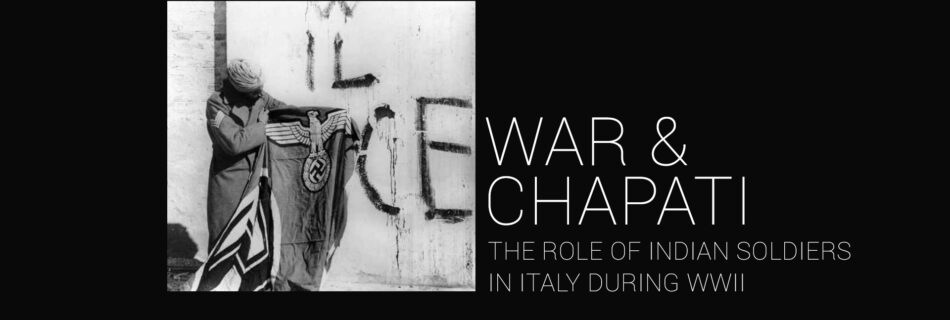
The role of Indian Soldiers in Italy during WWII The documentary illustrating the role of Indian soldiers has been in my thoughts for many years. It has been part of me, creating and finding my roots in Italy. Being an Indian migrant naturalised as an Italian citizen, it has been important for me to create emotional bonds with the territory where I live. Even though I have many friends and a loving relationship, land has its own connection. The research started when I came across the cover image used in this documentary, the image of an Indian soldier holding the fallen Nazi flag with the text “IL DUCE” in the background. Through this journey of gathering information and doing my research I have met many people and listened to many personal stories and explored some of the Italian territory where the blood of our people has laid the foundation of the Italian nation as we know it today. Even today this participation continues in building this nation. The same lands where the blood of the Indian soldiers was shed is now cultivated with the sweat of Indian migrants working as agricultural labour. Many of them, similar to the soldiers in the past, are forgotten by the state system, very little is done for their rights and recognizing their contribution. The making of this documentary is an effort to keep the memory alive and create some awareness both in the Indian diaspora and the Indian state, as well as among local Italians and Italian institutions. I hope that there will soon be a detailed chapter in the Italian school and university text books regarding the role of the colonies in the struggle against Nazi and Fascist rule. As much as 50,000 Indian soldiers volunteered in the Allied army in Italy during World War II. According to the Commonwealth War Graves Commission, 5504 Indian soldiers aged between 15 and 41 gave their lives fighting against Fascism and Nazism. These soldiers are buried, cremated and commemorated in various war cemeteries throughout Italy. Indian soldiers received six out of the 20 Victoria Crosses awarded during these campaigns. Their stories are still remembered in certain Italian villages, but they are not told and taught in schools and universities. Curricula teach only of the Allied victory, so the majority of Italians think that they were liberated only by the British and American forces. The role of the colonies has mostly been ignored in the liberation of Italy and Europe.

LOVE AND MONEY (Amore e soldi) - di Dennys Kelly I diritti dell’opera LOVE AND MONEY di Dennis Kelly sono concessi da Casarotto Ramsay & Associates, Londra, in collaborazione con Zachar International, Milano. Traduttore in Italiano: Gian Maria Cervo. Regia Saverio Giuseppe Paoletta Produzione Associazione Universarte / Saverio Giuseppe Paoletta Date e luogo della rappresentazione Teatro di Documenti - Testaccio Via Nicola Zabaglia 42 - 00153 Roma Venerdì 6 Maggio, ore 20:45 Sabato 7 Maggio, ore 20:45 Domenica 8 Maggio, ore 17:30 Interpreti Valentina Carrino (Jess); Saverio Giuseppe Paoletta (David); Daniela Bianchi (Madre); Barbara Gobbi (Dottoressa); Silvia Grassi (Val); Mario Ive (padre); Alessandro Massacci (Paul); Roberto Pesaresi (Duncan); Alessia Sala (Debbie). Musiche di Handel eseguite da Pierluigi Ricci – Maria Martirosyan Progetto grafico Harvinder Singh Ufficio stampa Stefania Vaghi Comunicazione Info cell: 3208274294 mail: saveriopaoletta70@gmail.com www.associazioneuniversarte.it

Il progetto “Get AP! Strategie per una cittadinanza globale dell’Agro Pontino” promosso da Dokita con il finanziamento dell’Agenzia Italia per la Cooperazione allo sviluppo – AICS, nasce con l’obiettivo di favorire interculturalità, scambio e integrazione tra i Comuni di Latina, Sabaudia, Terracina, Fondi e Formia, dove vive il 45% del totale provinciale dei migranti e dove caporalato e lavoro nero sono una piaga diffusa. Harvinder Singh socio e presidente della nostra associazione viene incaricato dal APS Tempi Moderni uno dei partner del progetto per realizzare delle interviste video e la creazione del portale del progetto https://www.getap.org/ Qui sotto le video interviste con un sguarda della esperienza raccontato in prima persona in chi vive il territorio come un cittadino sia in status di rifugiato che dello studente di seconda generazione che un imprenditore di orgini pakistane che ha fatto Italia la sua casa Le interviste « Prev1 / 1Next »studenti edit AMAN V1 subsnaseer edit V2 subslamine edit V1 b subskairaba edit V2 subsMonicastudenti edit CS V1ibrahim camravictory« Prev1 / 1Next »

The idea of making “La Colazione Italiana e il Mago Indiano” has been in my thoughts since long as I wished to bring to the forefront the contribution of migrant workers in something which has been very typical in Italian life, and has been associated with the Italian tradition, and over time has become an identity with which Italian’s associate. This short docufilm represents through the story of a typical Italian breakfast that is cornetto and cappuccino, the story of people around it. The Barista, the habitual customer, and the cornetto maker. Around this breakfast we can observe many things from food habits which go across national boundaries to nations and cultures far from the concerned territory. We can observe how a migrant who has never seen a cornetto is making the “typical” breakfast item of a nation a culture. And how the whole industry of this breakfast is now either worked or managed by migrant workers in this case Indians from the state of Punjab. And we also see that the people are completely unaware of this phenomenon. Many of the theories of globalization of the work force and a certain kind of communication and how a certain kind of work is taken over by migrant communities. Usually, such labor-intensive professions are not of choice by the locals and are left to emarginated or migrant workers. The perception and reality of everyday things behind the curtain are quite different. In this film we also come to see the forced migration during the second world war through the testimony of an elderly customer of the bar where he explains through his personal life story how he moved to Switzerland from Italy and how the life was hand to mouth, the struggle of during that period. How the Italian and European migrants will move to Switzerland for a better life, similarly we observe through the testimony of the Indian cornetto makers both an entrepreneur “social mobility” and a worker. They moved to Italy to improve their lives in the recent past. If we look through this documentary culture and migration and how the melting pot “happens”. We can see the migrant entrepreneur is happy to be in Italy he expressed during the interview he loves Italian food and expressed (not used in the video) that all is made of wheat both the Indian chapati and the Italian piadina. And if we go on the “bourgeoise” sphere of the society, the customer explains how the Literary cafes have been centers of culture from 1800s onwards. The Café has been a place of aggregation of ideas and thoughts influencing local culture and national policies. If we look at the language as part of culture and the most important tool of integration, we observe that the elder in the documentary mentions that even though he is born in Rome, his first language is the dialect which is spoken in the Canton Grigioni area of the Italian speaking Swiss region, later on when he came back to Rome, he learned the Roman dialect. Similarly, in the case of two Indian origin migrants we can observe the difficulty of expressing themselves in the Italian language even though they are very much integrated in the social and economic life. We can also observe the labor and migration channels how a certain community moves from one area to another following the same path as that of their kin or community members and find a space in the host nation both physical (choice of place for residing) and economic (choice of profession).
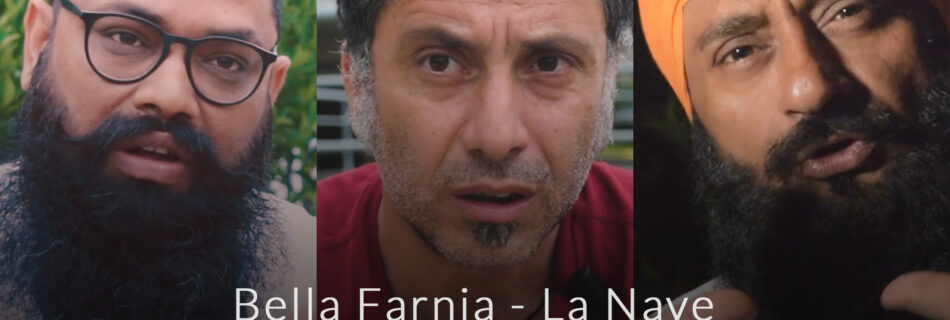
What A study of micro level example of city and dwelling including migration, migration policies and local community and a changing of narration Where Bella Farnia Residence, Sabaudia province of Latina. The residence of Bella Farnia is an example of building and dwelling where a residential complex intended to be used as a senior citizens housing project became a seaside vacation residence during the summer and over a period became the dwelling of migrants working in agriculture. Why The need for making a video where the migrants and the territory come out as protagonists and at the same time tell their own story and that of their “dwelling” has been the main objective for doing this research-based video. In the process an attempt to change the narration of how the Indian migrants are narrated in the mainstream media over the last few years. Who The video itself is a study on the ground of how migrants of many years with background as farm hands who have evolved to be an entrepreneur and a local leader involved in contrasting the phenomenon of “caporalato” on the very ground level and has been an artifice in organizing the first ever agriculture workers strike in area of Latina along with the national level agricultural workers unions like FLAI CGIL and UIL etc. Gurmukhi Singh has become a known figure in the territory of Latina and Terracina and is followed by many farm workers and is considered a leader fighting for the rights of the migrant workers. A few years ago, the workers were paid between 2.5 euros to 3.5 euros per hour but over the last years especially after the strike of 2016 the workers’ pay has increased to 5 to 5.5 euros per hour. He himself worked as a farm hand 30 years ago and knows what people go through in the agriculture industry. Over the years many local level projects funded by various ministries including the NGOs have provided their services at Bella Farnia. We have Sarbjit Singh Chauhan who has been an intercultural mediator with the NGO called “Emergency” and who himself has been a farm worker in his early years in the territory then through a process qualified himself and took his present role of mediator. He worked with emergency over a period of three years providing basic health services with a mobile clinic visiting Bella Farnia and over the years have assisted and listened to many migrants residing at Bella Farnia and has experienced the realities and difficulties of this small area. We have the testimony of a local social worker Marco Saputo who is involved in a project funded by the European Union’s - AMIF - Asylum, Migration and Integration Fund. Marco shares his insights and experience with Harvinder as filmmaker and social activist of the community of creating cultural events and the need for continuous presence of language courses in the area of residence, a permanent presence of a cultural association involving migrants and locals along with the administration. How The video lets us create empathy and at the same time provide vital and important information. Even the language spoken by migrants is not perfect as that of “Accademia della Crusca” but the emotional impact and at the same time the information that a serious policy of providing Italian language and cultural courses is required. The video interviews were shot over a period of two days. Though various pre-production discussions took place about the importance and practical aspects of realizing the video, even though nothing was scripted and only the idea of expressing oneself without hesitation or any time limit or the fear of being manipulated was there. The message, the voice, the expression should come out with its own flow and words, without the interviewer influencing the interview. During these three interviews many subjects were expressed, from the problems faced by the migrants for their day to day living in the residence to the more complex issues of integration – inclusion - melting pot and access to information. The process of editing the interviews has been selective in terms of being specific to the original idea even though many issues were discussed, and opinions were expressed. Expected results Finally, the migrant’s point of view without filters or manipulation is what has been communicated through the video and this is the expected result from the point of view of the production. The other is the impact on people who see it. The video has been shown to experts in the field of social work and professionals who work in projects related to migration and agriculture, their opinion about the video has been positive. The video has been presented to a few Indian YouTube based channels and they are very much interested to show it though we will need to dub or subtitle it in the Punjabi language to have an outreach in thousands. The video has been able to stimulate discussion in the professional and academic spheres and also in the Indian diaspora. Previous work on Bella Farnia As Harvinder his earlier journalistic work on Bella Farina in 2011, the link below has the report of that video which has won award from the Newspaper La Stampa : Si aggiudica il primo premio della giuria tecnica per la qualità giornalistica a tutto tondo il video «Tan Kosh» dedicato alla difficile vita della comunità Sikh nell’agro pontino, un documentario collettivo che porta la firma di Saverio Paoletta, ma anche di Harvinder Singh (Sikh trapiantato in Italia) e Giordano Cossu Link to the work : https://www.associazioneuniversarte.it/tan-kosh/
Lo Sportello Progetto Jago e un sportello di ascolto e orientamento verso i servizi per i cittadini di origini straniere sul territorio Italiano. lo sportello e presente sia attraverso mezzi telematici usando l’email della associazione e anche in presenza ogni prima domenica del mese al Tempio Sikh – Gurudwara Shri Guru Nanak Darbar Roma – situato in via Prenestina – Via di Valle Bagnata 20, Roma. gli orari del sportello sono dalle 1200-1400.
Versione con i sottotitoli in italiano per la versione con i sottotitoli in ingelse per favore guardate la pagina del Canale Youtube della associazione Ero in Delhi nel giorno quando gli agricoltori dal Punjab sono arrivati al confine della città di Delhi, dopo avere scavalcato tante barriere messe sulla strada dal governo del stato di Haryana. Questo video di 10 minuti circa illustra il mio reportage e punto di vista di un attore, un cantante un agricoltore e un studente universitario.

Il progetto nasce per dare risposta alle esigenze di inclusione e di partecipazione sociale dei migranti. La non conoscenza della lingua italiana è stata individuata come una delle cause principali di questa situazione. Non conoscendo la lingua italiana i migranti non riescono ad accedere ai servizi offerti dal Comune o dal SSN e i genitori non riescono a parlare con gli insegnanti a scuola. La parola JAGO in punjabi significa “SVEGLIA”, a sottolineare la necessità per le comunità migranti di prendere coscienza dei propri diritti e di dotarsi di strumenti di integrazione con il resto della comunità civica nonché di conoscenza e di affermazione della propria identità e dei propri diritti. I 3 Gurudwara che fanno parte del progetto sono quelli di Roma Massimina, Roma Prenestina e Viterbo e ognuno di essi fa riferimento ad una comunità di circa 500 persone che frequentano in modo regolare di domenica. In particolare il Gurudwara di Roma - Massimina fa riferimento alle zone di Maccarese, Ladispoli, Cerveteri e tutta la Roma Nord e quello di Roma Prenestina, il “Gurudwara Shri Guru Nanak Darwar Roma”, è il tempio sikh più giovane del territorio romano, situato nella periferia est. Una recente ricerca definisce i “Gurdwara” come “un luogo di formazione religiosa, uno spazio di incontro e di sostegno per i membri” che “nel grande agglomerato urbano ha assunto il ruolo di ‘rifugio’ e di ‘risorsa’” (Silvia Omenetto, “La comunità punjabi sikh e i gurdwara nel Lazio: monitoraggio di una presenza in evoluzione”, in Centro Studi Idos, “Osservatorio romano sulle migrazioni. XIII rapporto”, Edizioni IDOS, 2018). Sotto la leadership di Harvinder Singh, intellettuale indiano naturalizzato, le varie competenze dei diversi partner di questo progetto sono state messe insieme per offrire alle comunità di riferimento territoriale modalità d’intervento mirate alle loro specifiche caratteristiche e ai loro effettivi bisogni. Ogni corso prevede: Una scuola di lingua e cultura italiana dove non sono le persone ad andare a scuola, ma è la scuola che va dove la comunità già si riunisce. La scuola di lingua e cultura italiana ha la finalità di stimolare l’autonomia, la valorizzazione e la partecipazione attiva, con particolare riguardo alle donne, contrastando i fenomeni di esclusione e isolamento che spesso colpiscono le donne migranti. La metodologia di lavoro è disegnata intorno ai bisogni dei destinatari e mette la persona al centro del percorso di apprendimento. Predilige il coinvolgimento attivo e una didattica operativa. Il corso è finalizzato all’inclusione sociale di chi vi partecipa poiché rappresenta un ponte tra i nuovi arrivati e il contesto italiano, anche grazie all’attivazione di una rete territoriale che sostiene le persone nei loro bisogni di orientamento legale. Il corso di italiano sarà articolato in 3 moduli, per un totale di 100 ore complessive, con un incontro settimanale di 3h. Sarà tenuto da un'insegnante di italiano L2 coadiuvato da un mediatore linguistico/culturale esperto. Formazione e orientamento sui diritti (sportello legale una volta al mese). In particolare, grazie al lavoro in loco di esperti selezionati dai partner del progetto, verranno svolte le seguenti attività: Sportello legale al Tempio (3 ore 1 domenica al mese) Referral allo sportello legale di A Buon Diritto Onlus per le prese in carico Attività di back office relative all’attività di sportello legale Incontri con la comunità sul tema dei diritti e della cittadinanza Sportello di orientamento e informazioni sui servizi a cui si ha diritto e come farne richiesta: iscrizioni asilo nido e materne; buoni libro; prenotazioni online PA; appuntamenti in Municipio; iscrizione e accesso ai servizi dell’Agenzia delle entrate, dell’INPS, delle poste; iniziative di sostegno al reddito; Carta acquisti; assegno e premio di natalità; agevolazioni abbonamenti ATAC; bonus sulle tariffe AMA, consumo Elettrico e GAS; fondo morosità incolpevole; contributo municipale per il sostegno al canone di affitto; possibilità di tirocini, formazione, inserimento lavorativo; bandi; imprenditoria femminile; soggiorni estivi anziani; agevolazioni ed esenzioni; affitti e morosità incolpevole; assistenza domiciliare Sensibilizzazione e formazione di un gruppo di giovani potenziali leader di comunità da impiegare nel progetto come facilitatori . Questi giovani verranno formati per fungere da ponte e da mentori nei confronti dei propri concittadini, diffondendo informazioni e pratiche riguardanti rivendicazione di diritti, servizi della pubblica amministrazione, orientamento sanitario, cittadinanza digitale, relazioni con altre comunità, servizi e organizzazioni favorendo così a cascata l'integrazione di un numero sempre maggiore di persone. I seminari in cui verranno coinvolti saranno propedeutici alla costruzione del percorso di formazione che verrà svolto presso i templi la domenica e serviranno inoltre a preparare il materiale per le guide in podcast realizzati nelle principali lingue parlate dai beneficiari di progetto (indiani, punjabi) e caricati sui siti e le piattaforme utilizzate dai partner di progetto o con maggiore visibilità (ad es.: YouTube, Facebook, Instagram etc.). Lo scopo dei podcast è quello di produrre materiale divulgativo /informativo a beneficio della comunità indiana. Lo scopo di questi seminari è quello di rilevare le principali problematiche che la comunità indiana nel Lazio deve affrontare quotidianamente e le soluzioni previste dal nostro ordinamento giuridico. Da questi spunti di riflessione si ricaveranno i temi principali per le giornate di formazione e orientamento sui diritti previste dal progetto. Il progetto Jago è sostenuto dall'ambasciata indiana in italia, la quale ha fornito sostegno, supporto anche economico attraverso la fornitura dei libri di testo utlizzati per i corsi già attivi. il sito dedicato https://www.associazioneuniversarte.it/pj/
Il nostro ultimo lavoro documentaristico sul sito di RAI PLAY lo potete guardare qui